









































































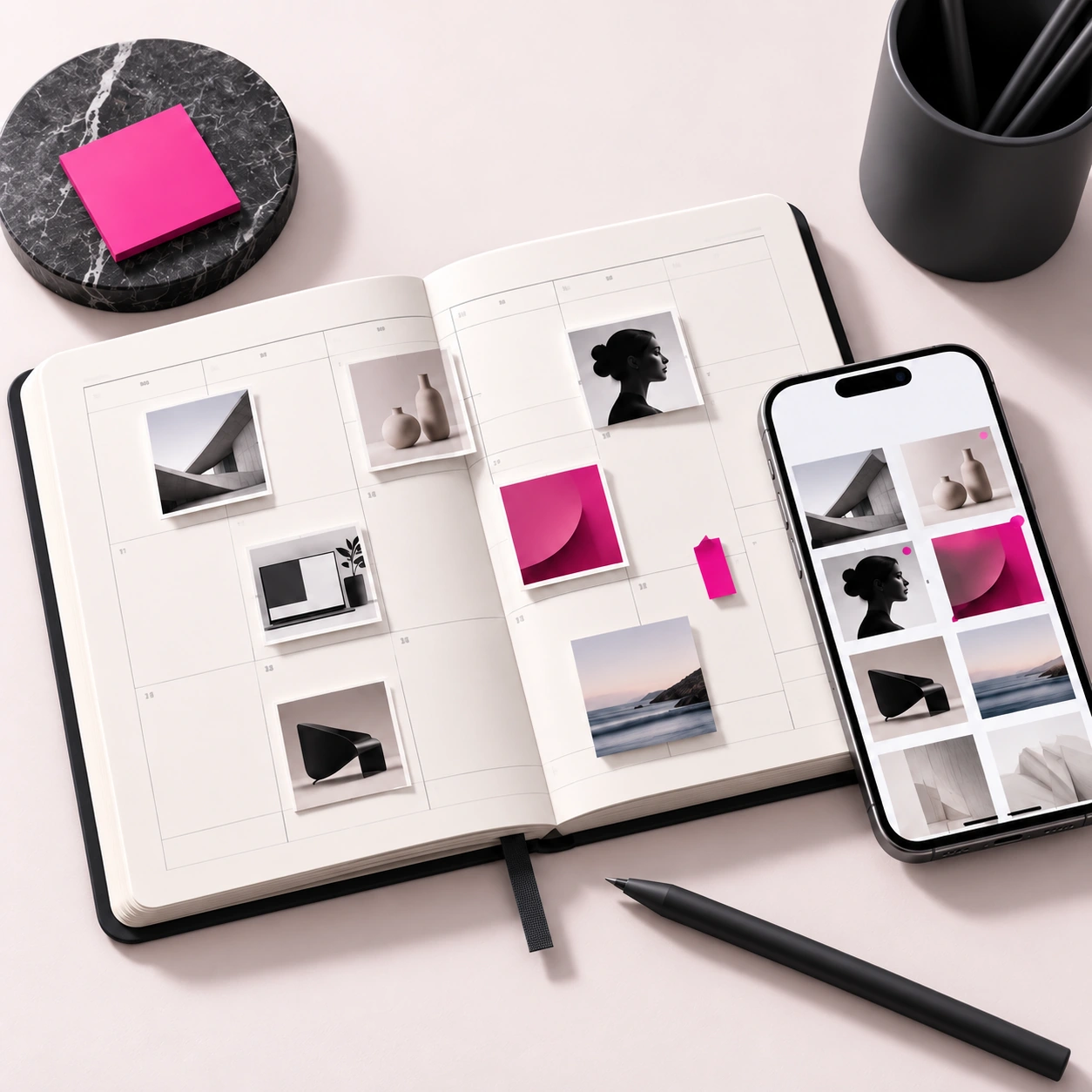
On social media, websites and presentations everything moves. A static brand risks looking still even when the company is racing ahead.
The animated logo
A short logo animation for the start and end of videos, stories and presentations. A few seconds that make the brand memorable and consistent across every piece of content.
Explaining in a minute
A complex service becomes clear with an animated explainer video: shapes, icons and text following a voice-over. Ideal for home pages and campaigns.
A language of movement
Just as there are brand colours and typefaces, there’s a way of moving: fast or soft, geometric or organic. Defining it makes even the simplest animations recognisable.
Lightness and performance
On websites, animations must be light and respect people who prefer less motion. Well-designed motion helps reading rather than slowing it down.
Where to use motion graphics
Video openers, stories and reels, presentations, home pages, ad campaigns, screens at trade fairs and in stores. Wherever there’s movement, a consistent animated language makes the brand recognisable.
How an animation is made
It starts with a script or a concept, then a storyboard with the key scenes, then the visual style, and only then the animation. Every stage is shared, so the final result is never a surprise.
Animation on websites
Micro-animations on buttons, transitions between sections, illustrations that move as you scroll. Used sparingly they guide attention and make the site more enjoyable; too many slow it down and distract.
Motion accessibility
Some people feel unwell with on-screen motion. A professional website respects the device’s “reduce motion” setting and shows a static version: a detail that makes a difference.
Motion graphics and social media
On social media, movement stops the scroll. An animated carousel, a number growing on screen, a headline building letter by letter: small movements that increase watch time and make content more memorable. Preparing a reusable animation kit, with intro, outro, captions and transitions in your brand style, lets you produce consistent videos quickly, even in-house, without starting from scratch every time.
Explainer videos: structure and length
A good explainer runs sixty to ninety seconds and follows a simple structure: the client’s problem, the solution, how it works, why choose you, the call to action. The script is written before animating, with short sentences and concrete language. Voice-over, music and pacing must match the brand’s tone of voice. On a home page or landing page, a video like this explains in a minute what would take many lines of text.
Production costs and timelines
A simple animated logo takes a few days; a complete explainer video, across script, storyboard, illustration, animation and revisions, a few weeks. Cost depends on length, illustration complexity and the number of versions and formats. Planning the required formats together, for example landscape for the website and vertical for social media, avoids duplicate work and lowers costs.
Motion language in your brand guidelines
Like colours and typefaces, movement can be described in rules: typical animation durations, easing curves, how text and shapes enter and exit, permitted transitions. Adding these to your brand guidelines lets anyone producing content, in-house or external, create consistent animations. It’s the step that turns a few animated videos into a true identity in motion, recognisable across website, social media and presentations.
In conclusion
Motion graphics gives your brand movement and personality, makes complex services clear and makes your content recognisable everywhere. Explore our video and motion graphics or let’s talk.
In short
- An animated logo makes the brand memorable.
- Explainer videos simplify complex services.
- Define a motion language for your brand.
Frequently asked questions
Which formats will I receive?
Videos for social media and website, transparent-background versions and lightweight web animations.
Do I need a voice-over?
Not always: many videos work with music and on-screen text.
How long is an animated logo?
Usually two to five seconds: long enough to be recognised, short enough not to bore.
Can I use the animations in presentations?
Yes, they can be exported in formats compatible with PowerPoint, Keynote and Google Slides.
Keep reading
Want to apply this to your business? Let’s talk →